Wood privacy
Wood privacy fences
Privacy fencing is most of what we build, and it's where the steel post decision matters most. A six foot solid fence is a sail. It catches every bit of wind that comes through, and everything it catches transfers straight into the posts.
01 / Styles
Styles
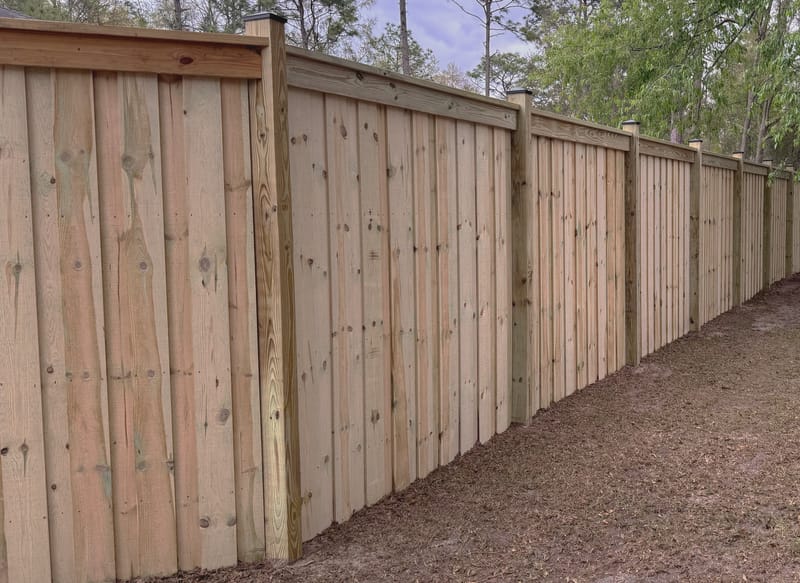
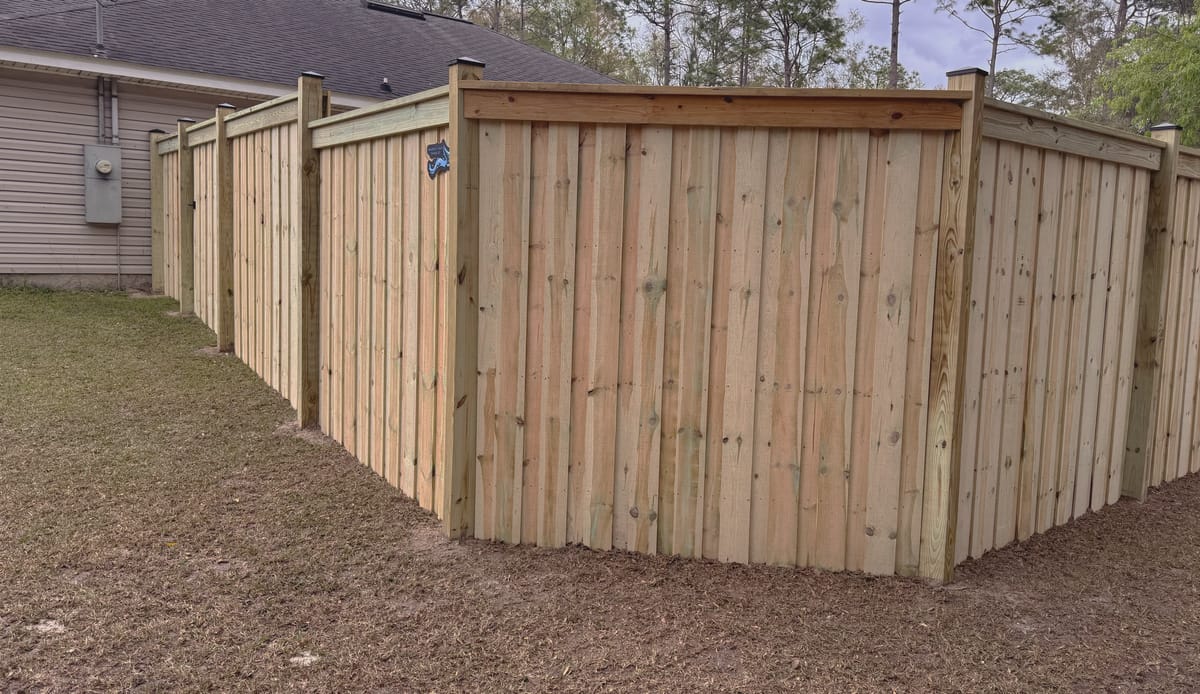
Board on board.
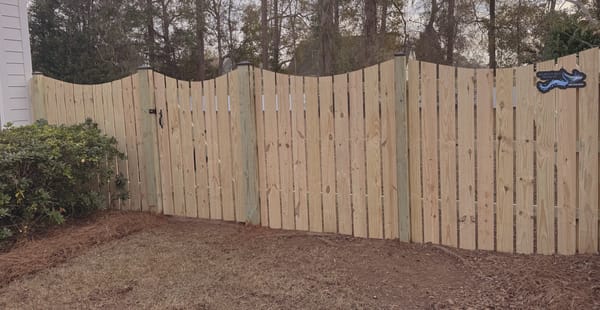
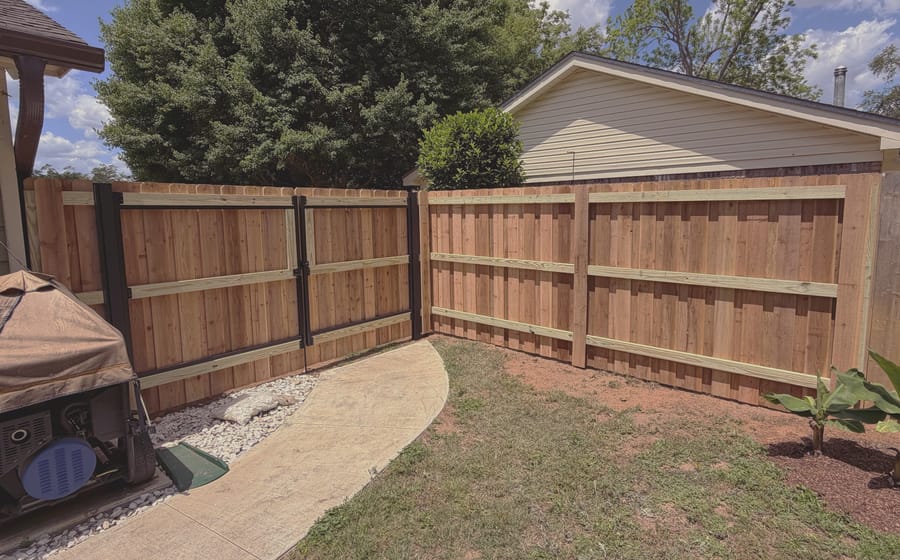
Pickets overlap so there are no gaps, now or later as the wood moves. The most private option and the one we build most often.
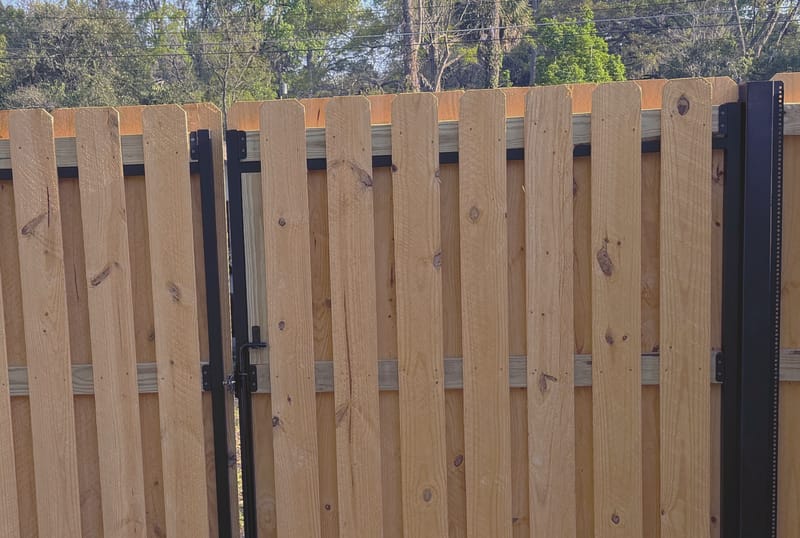
Shadowbox.
Pickets alternate front and back. Looks finished from both sides, lets air through, and holds up well on exposed runs. A good choice when a solid wall would catch too much wind.
Dog ear.
The traditional profile. Straightforward, clean, and less expensive than board on board while using the same posts and hardware.
02 / Standard on every build
What's standard on every privacy fence
- Galvanized steel posts, 36 inch embedment, set in crowned concrete
- Pre-stained pickets, factory finished on all faces
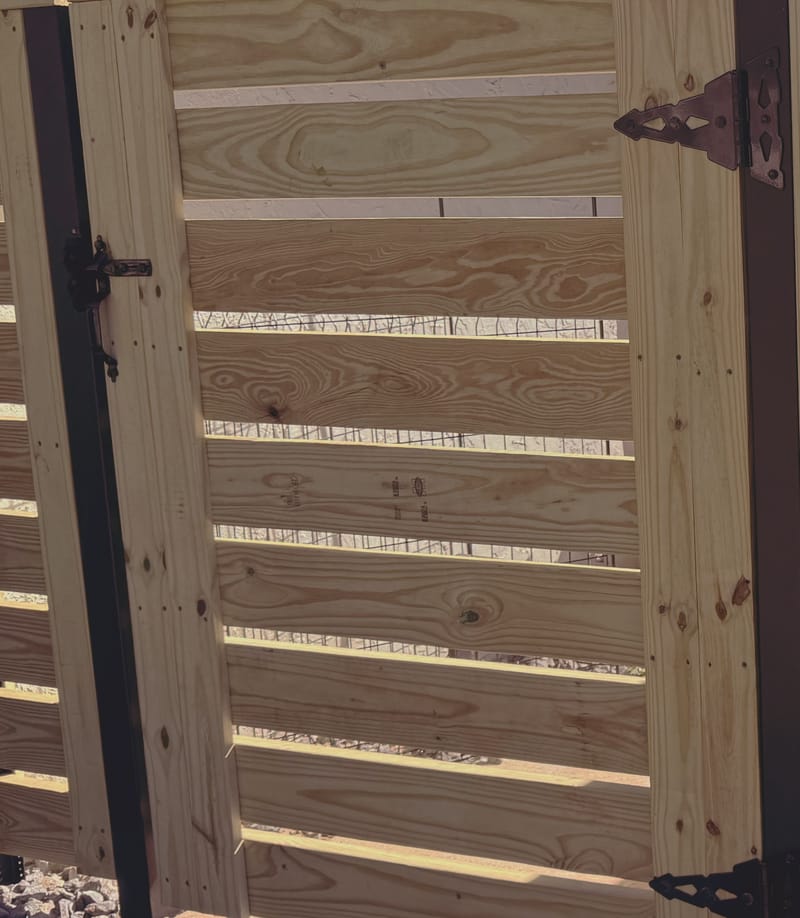
- Welded steel gate frames wherever there's a gate
- Concrete crowned to shed water at every post
- Full written specification before we start
We don't offer a version of this without the steel posts. If a budget needs to come down, we'll change the scope before we change the build. That usually means adjusting the picket grade or the fence style rather than putting a wood post in the ground.
"Pressure treated" is not one thing.
The standard that governs treated wood, AWPA U1, does not treat a fence as a single product. In its commodity table, sawn fence posts are Use Category 4A, which is the ground contact category. Fence pickets and fence rail are Use Category 3B, which is above ground. Two different specifications, two different retentions, sold under the same three words at the same yard.
That matters because a fence only performs as well as whichever piece was under specified. It is also why the bottom of a picket is worth asking about: the standard puts anything sitting less than six inches above final grade, or anywhere soil and leaf litter can pile against it, into the ground contact category regardless of what the label on the bundle says.
American Wood Protection Association, Standard U1, Use Category System, Section 2 and Table 3-1. Published excerpt.
03 / Questions
The things people actually ask
Board on board, shadowbox or dog ear?
Board on board overlaps the pickets so there are no gaps, now or later as the wood moves. It is the most private and the one we build most often. Shadowbox alternates pickets front and back, looks finished from both sides, and lets air through, which helps on exposed runs.
Dog ear is the traditional profile: straightforward, clean, and less expensive than board on board while using the same posts and hardware.
Which neighbor gets the good side?
Neither, and that is deliberate. The steel posts are designed to sit behind the pickets, so the finished fence reads as wood from both sides.
You never have to have the conversation about which way round it faces.
Do the pickets arrive already stained?
Yes. They are pre-stained, factory finished on all faces, which means the back of the picket and the parts behind the rail are finished too.
A picket stained on site is stained on the faces somebody could reach, and the faces they could not reach are the ones that go first.
Can I have this without the steel posts, for less?
No. We do not offer a version of this build without them, because the steel post is the whole argument.
If a budget needs to come down we will change the scope before we change the build. That usually means adjusting the picket grade or the fence style rather than putting a wood post in the ground.
Want one of these?
Call or send an email and we'll come walk the line with you. You'll get a written specification before anything goes in the ground.