Gates
Gates
If a fence is going to fail somewhere, it fails at the gate. It's the only part with moving loads, and it's the part you touch every day.
01 / Why they hold
Why ours don't sag
A wood gate frame is a rectangle held together at the corners, hung off one edge, and swung several thousand times a year. Over time the corners work loose and the rectangle becomes a parallelogram. That's the sag. It isn't bad building, it's geometry plus weather.
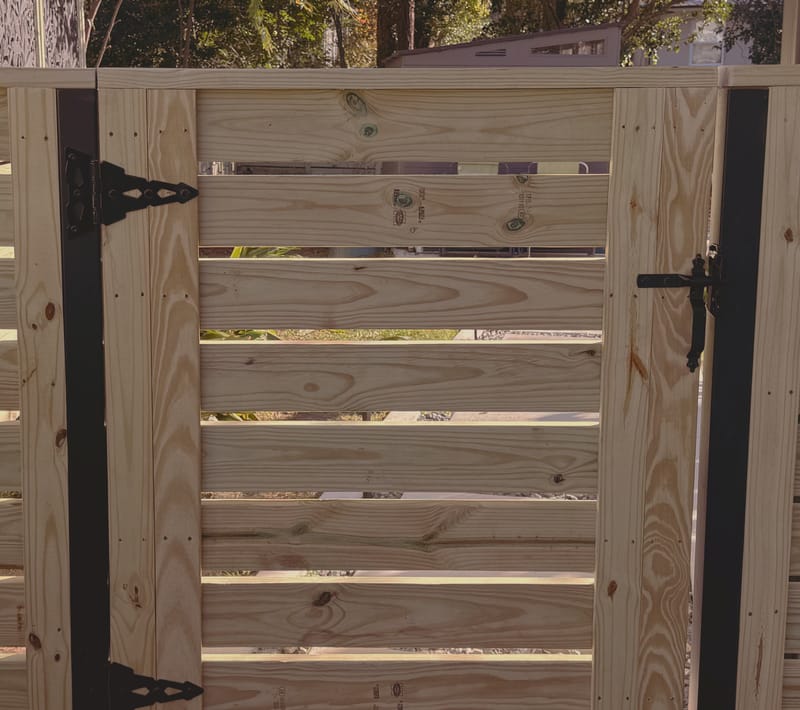
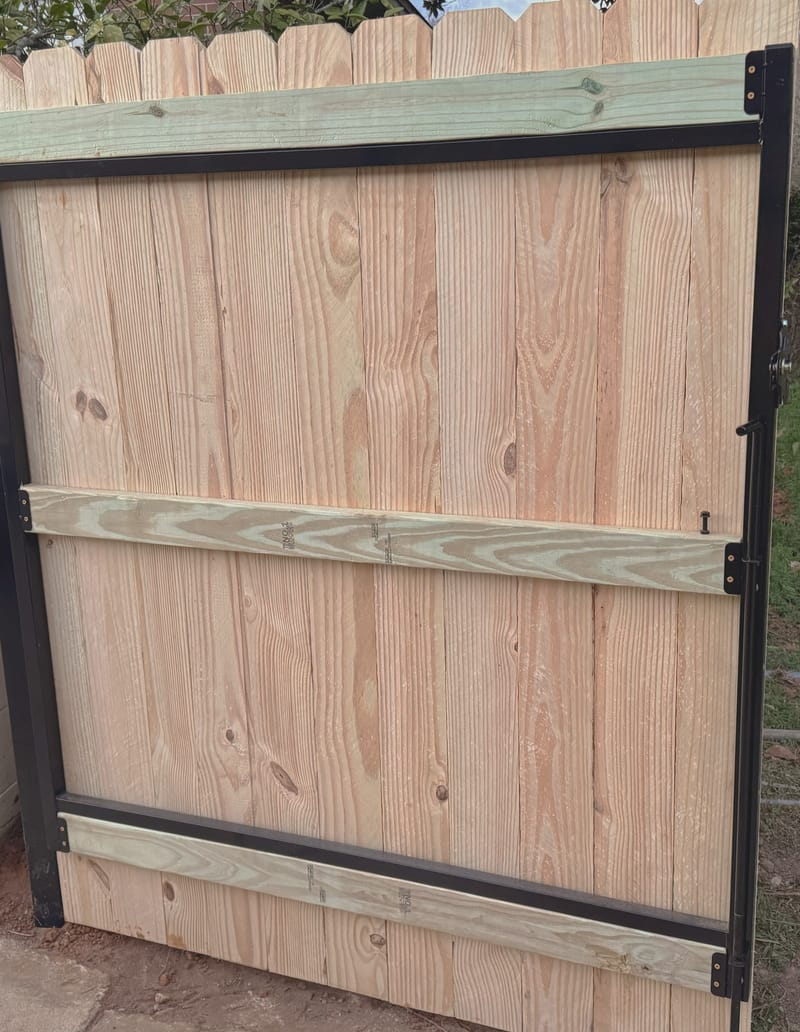
We build gate frames from 16 gauge welded steel, powder coated black, hung on steel gate posts rated to 112 mph. The frame doesn't rack, so the gate keeps its shape. When the pickets eventually weather, you re-picket the same frame.
The manufacturer warrants these frames for a limited lifetime. Same terms as the posts: original residential purchaser, replacement material, coastal environments excluded.
02 / What we build
What we build
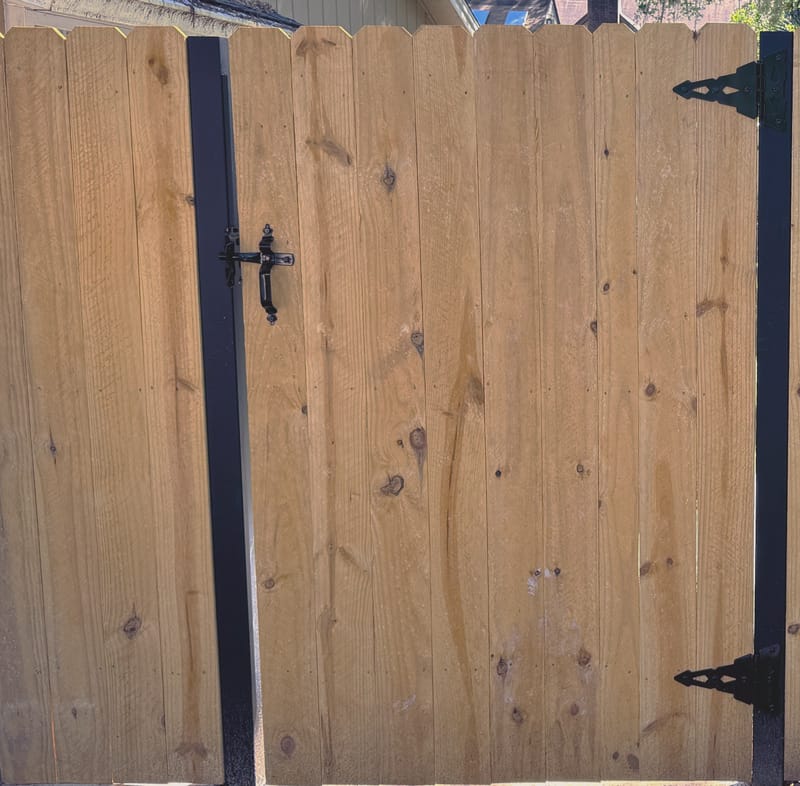
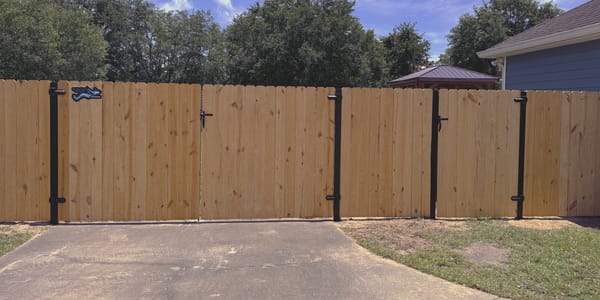
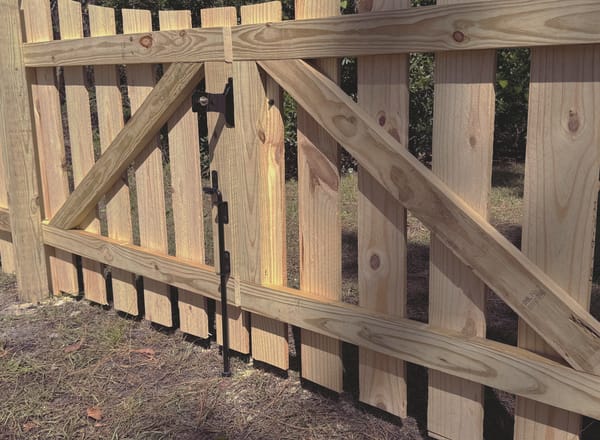
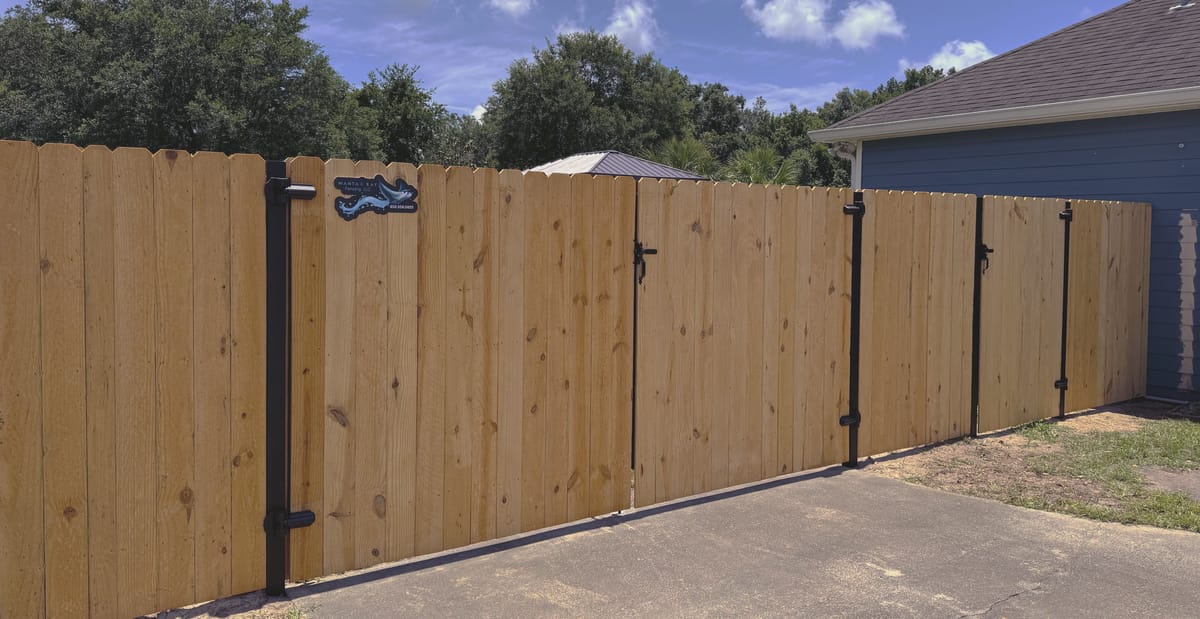
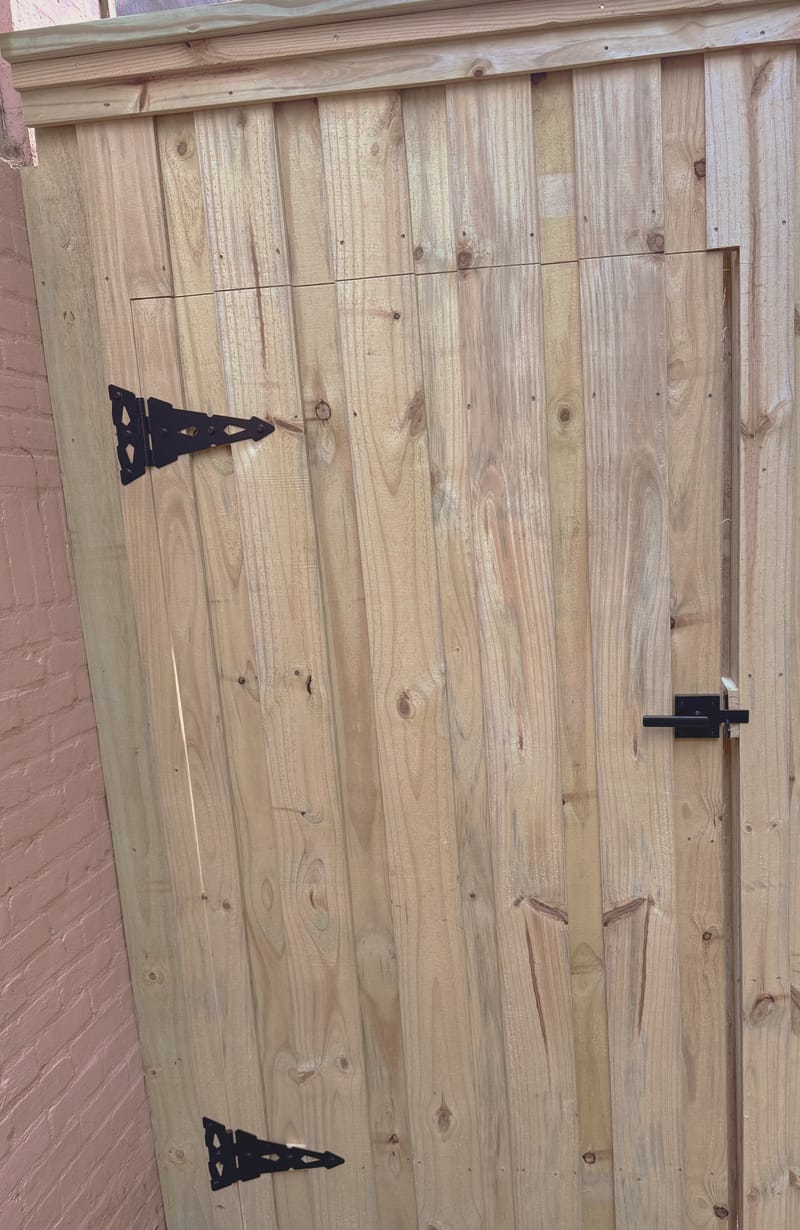
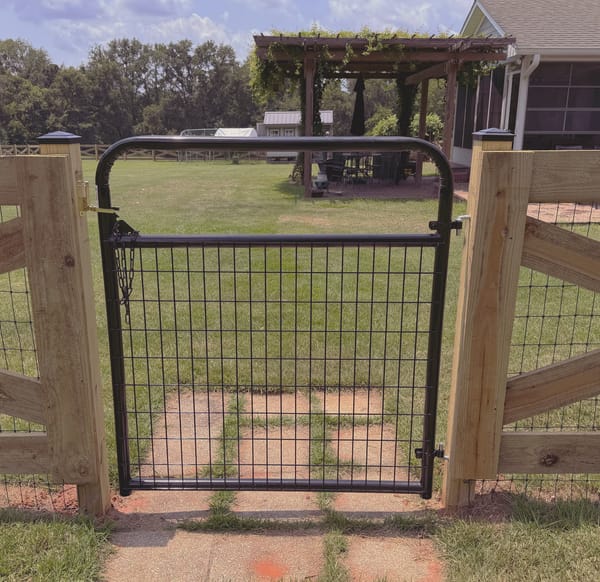
Single walk gates, double drive gates, and oversized entry gates for farm and property entrances. Commercial grade hinges and latches on everything, self closing and self latching where pool code requires it.
03 / Questions
The things people actually ask
Why is the gate always the first thing to fail?
Because it is the only part of the fence that moves. A gate frame is a rectangle hung off one edge and swung several thousand times a year, and over time the corners work loose and the rectangle becomes a parallelogram. That is the sag.
It is not bad building. It is geometry plus weather, and the only real answer is a frame that cannot rack in the first place.
Can you re-picket a gate rather than replace it?
If the frame is sound, yes. That is the point of building the frame from steel: when the pickets eventually weather you re-picket the same frame rather than starting again.
If the frame itself has gone out of square, re-picketing it only hides the problem for a season.
What sizes of gate do you build?
Single walk gates, double drive gates, and oversized entry gates for farm and property entrances.
Commercial grade hinges and latches on everything, and self closing and self latching hardware wherever pool code requires it.
Does a pool gate need different hardware?
Yes. A pool gate has to close itself and latch itself every time, without anybody thinking about it, because a gate propped open is the same as no barrier at all.
That is not an upgrade on our pool work, it is the part of the barrier that does the actual job.
Gate sagging already?
If an existing gate has dropped, tell us what it's hung on. Call or email and we'll tell you whether it's worth re-hanging or worth rebuilding.